

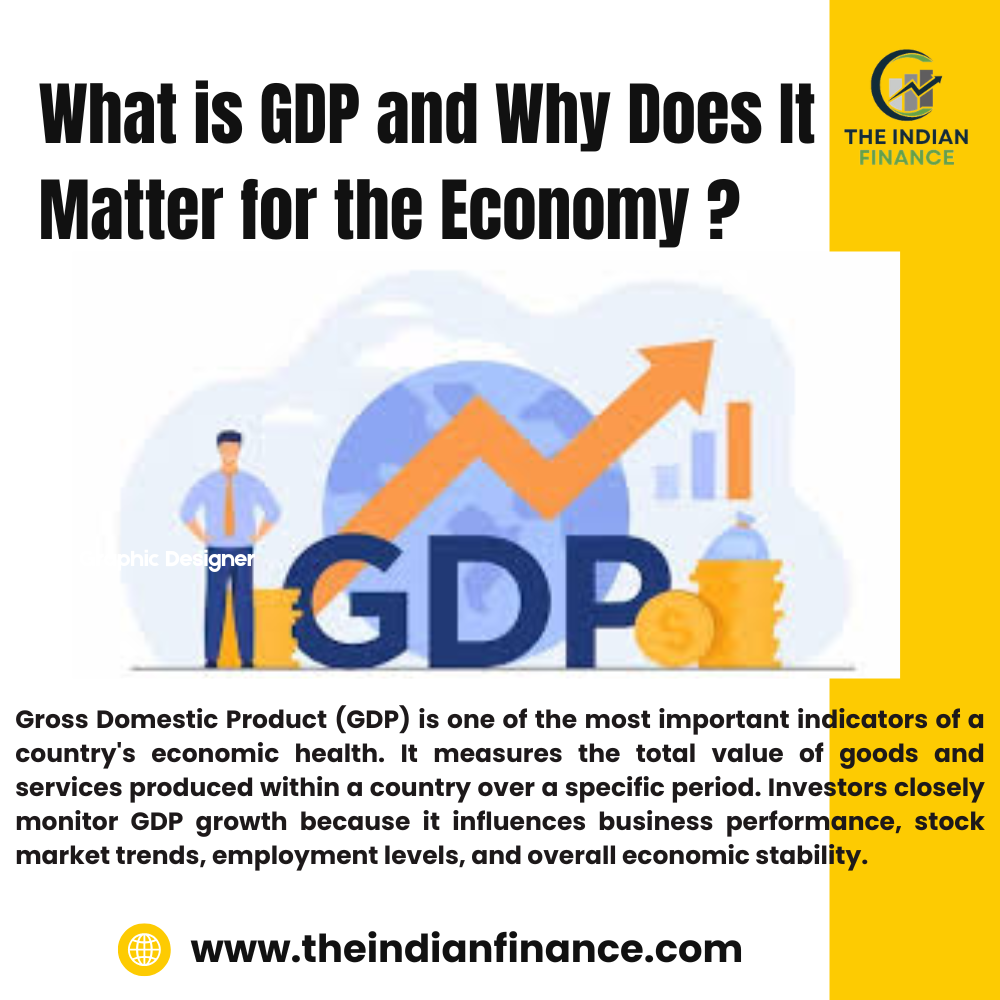
Gross Domestic Product (GDP) is one of the most important indicators used to measure the economic performance of a country. It helps governments, businesses, investors, and economists understand whether an economy is growing or slowing down. Whether you are an investor, business owner, or simply someone interested in financial awareness, understanding GDP is essential. In this blog, let’s explore what GDP is and why it matters for the economy.
What is GDP?
GDP stands for Gross Domestic Product. It represents the total monetary value of all goods and services produced within a country’s borders during a specific period, usually annually or quarterly.
In simple terms, GDP measures the size and health of an economy.
When GDP grows, it usually indicates economic expansion. When GDP declines, it may signal economic slowdown or recession.
How is GDP Calculated?
GDP is generally calculated using the expenditure method:
GDP=C+I+G+(X−M)GDP = C + I + G + (X – M)GDP=C+I+G+(X−M)
Where:
- C = Consumption (consumer spending)
- I = Investment (business spending)
- G = Government Spending
- X = Exports
- M = Imports
This formula helps economists calculate total economic activity in a country.
Types of GDP
There are different types of GDP used for analysis.
1. Nominal GDP
Nominal GDP measures economic output using current market prices without adjusting for inflation.
2. Real GDP
Real GDP adjusts for inflation, providing a more accurate picture of actual economic growth.
3. GDP Per Capita
GDP per capita divides total GDP by the population, showing average economic output per person.
These measurements help economists better understand economic performance.
Why Does GDP Matter?
GDP is a major indicator of economic health and affects almost every sector of the economy.
Key Reasons GDP Matters:
- Measures economic growth
- Reflects business performance
- Influences government policies
- Affects stock markets
- Impacts employment rates
- Helps investors make decisions
Understanding GDP helps individuals and businesses plan better.
GDP and Economic Growth
When GDP increases, businesses often perform better, job opportunities grow, and consumer spending rises.
A growing GDP usually indicates:
- Strong consumer demand
- Higher business profits
- Increased employment
- Better investment opportunities
This creates positive economic momentum.
GDP and Employment
GDP has a strong connection with employment. A growing economy usually creates more jobs, while a shrinking economy may lead to layoffs and unemployment.
Higher GDP growth often means:
- More hiring
- Increased wages
- Stronger business expansion
This improves overall economic stability.
GDP and Investors
Investors closely monitor GDP data because it affects stock markets, industries, and business growth.
Strong GDP growth can indicate:
- Higher corporate earnings
- Stronger market performance
- Better investment opportunities
Weak GDP growth may create uncertainty in financial markets.
This is why GDP reports often influence market sentiment.
Factors That Affect GDP
Several factors influence a country’s GDP.
Major Factors Include:
- Consumer spending
- Business investments
- Government policies
- Interest rates
- Inflation
- Exports and imports
- Global economic conditions
Changes in these factors directly impact economic growth.
Limitations of GDP
Although GDP is important, it does have limitations.
GDP Does Not Measure:
- Income inequality
- Environmental impact
- Quality of life
- Happiness or well-being
- Informal economy activities
This means GDP should not be the only measure of a country’s progress.
Why Should You Understand GDP?
Understanding GDP helps individuals make smarter financial decisions.
Whether you are:
- An investor
- Business owner
- Student
- Trader
- Financial planner
GDP knowledge helps you understand economic trends and future opportunities.
It allows you to make better decisions in business, investments, and financial planning.
Conclusion
GDP is one of the most important economic indicators used to measure the health and growth of a country’s economy. It reflects the total value of goods and services produced and provides valuable insights into economic performance. While GDP has limitations, it remains a critical tool for governments, businesses, and investors. Understanding what GDP is and why it matters for the economy can help you make informed financial and investment decisions in a constantly changing economic environment.
🚀 Start Trading Today – Open Your FREE Demat Account!
Option 1: Open Free Demat Account with Zerodha
Open a free demat account with Zerodha and start investing in stocks, derivatives, mutual funds, ETFs, bonds, IPOs, and more.
✅ Open Free Zerodha Demat Account
Option 2: Open Free Demat Account with Upstox
Looking for one app, one account to build your wealth? Join Upstox, loved and trusted by 1 cr+ Indians.
Open your account using our link within 7 days and enjoy:
🛒 Stock like you shop
💸 Buy Top Funds & Insurance
📰 News & expert insights
📈 Pro Mode to trade in F&O
Disclaimer
Disclaimer: This article is intended for educational and informational purposes only and should not be considered financial advice. Investments in stocks, mutual funds, and other financial instruments are subject to market risks. Investors should conduct their own research and consult a qualified financial advisor before making investment decisions. Past performance does not guarantee future results.