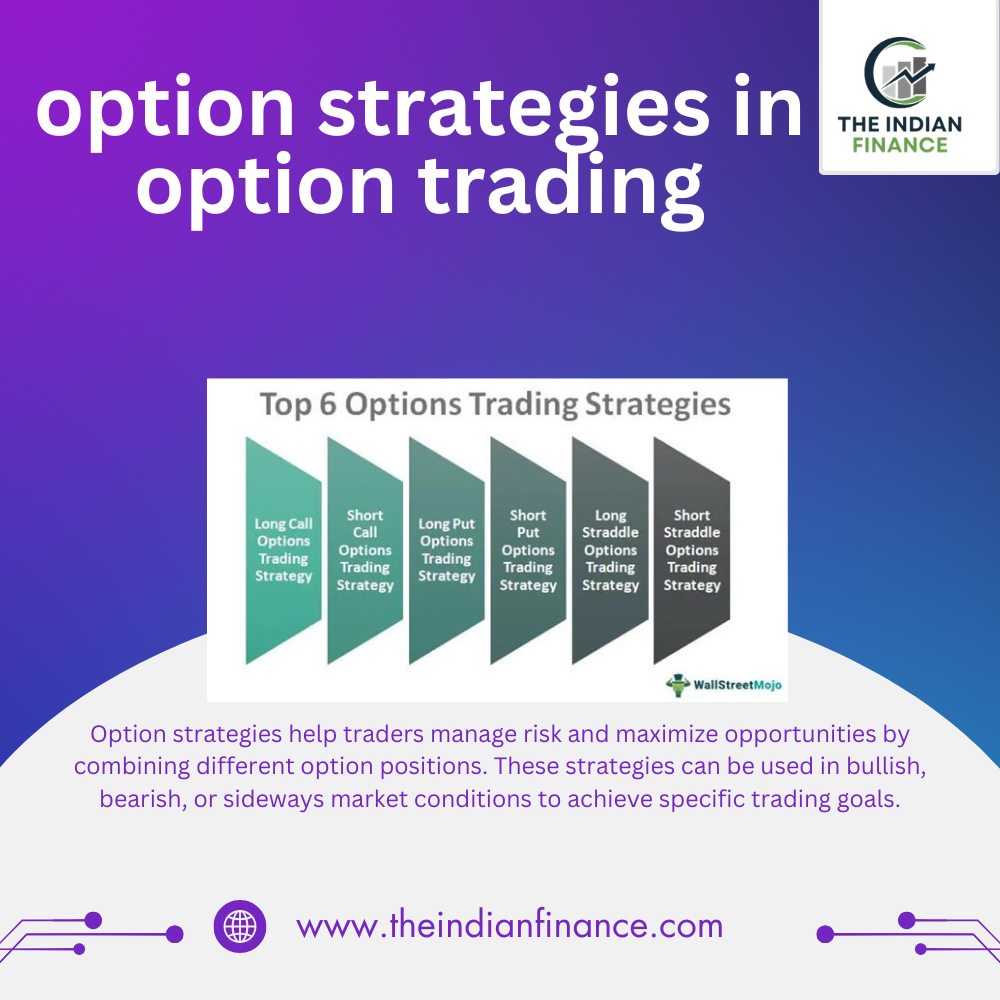
Options trading offers traders flexibility, risk management opportunities, and the potential to profit in different market conditions. However, success in options trading often depends on using the right strategy for the right market scenario. Understanding Option Strategies in Option Trading helps traders manage risk, maximize returns, and make informed trading decisions. The Indian Finance provides valuable financial education to help traders understand and apply option strategies effectively.
What Are Option Strategies?
Option strategies are pre-planned trading approaches that combine calls and puts (sometimes with stocks) to profit from specific market conditions—whether bullish, bearish, or sideways. Unlike naked buying, strategies help limit risk and improve probability of success.
Why Use Option Strategies?
| Benefit | Explanation |
|---|---|
| Risk Management | Limit losses while defining maximum profit |
| Market Flexibility | Profit in rising, falling, or sideways markets |
| Cost Efficiency | Lower capital requirement vs. buying stocks outright |
| Hedging | Protect existing portfolios from adverse moves |
| Income Generation | Earn premiums through selling strategies |
Top Option Strategies Every Trader Should Know
1. Covered Call (Bullish/Neutral)
How it works: Own 100 shares + sell 1 call option
Best for: Generating income on stocks you own
Max Profit: Limited to premium received + strike price difference
Max Loss: Stock price falling to zero (minus premium)
Risk Level: Low
Ideal when: You’re moderately bullish or neutral
2. Protective Put (Bullish + Hedging)
How it works: Own 100 shares + buy 1 put option
Best for: Protecting gains while staying long
Max Profit: Unlimited (stock can rise infinitely)
Max Loss: Limited to premium paid + stock decline
Risk Level: Low-Medium
Ideal when: You’re bullish but want downside protection
3. Bull Call Spread (Moderately Bullish)
How it works: Buy 1 lower strike call + sell 1 higher strike call (same expiry)
Best for: Limited-risk bullish trades
Max Profit: Difference between strikes − net premium paid
Max Loss: Limited to premium paid
Risk Level: Medium
Ideal when: You expect moderate upside, not a massive rally
4. Bear Put Spread (Moderately Bearish)
How it works: Buy 1 higher strike put + sell 1 lower strike put (same expiry)
Best for: Limited-risk bearish trades
Max Profit: Difference between strikes − net premium paid
Max Loss: Limited to premium paid
Risk Level: Medium
Ideal when: You expect moderate downside
5. Long Straddle (Neutral → Volatile)
How it works: Buy 1 ATM call + buy 1 ATM put (same strike & expiry)
Best for: Earnings, events, or high volatility expected
Max Profit: Unlimited (if market moves sharply either way)
Max Loss: Limited to total premium paid
Risk Level: Medium-High
Ideal when: You expect big move but unsure of direction
6. Long Strangle (Neutral → Volatile, Cheaper than Straddle)
How it works: Buy 1 OTM call + buy 1 OTM put (different strikes, same expiry)
Best for: Lower cost than straddle, still profits from volatility
Max Profit: Unlimited
Max Loss: Limited to premium paid
Risk Level: Medium-High
Ideal when: Expecting big move but want to reduce premium cost
7. Short Straddle (Neutral/Stable Market)
How it works: Sell 1 ATM call + sell 1 ATM put (same strike & expiry)
Best for: Profiting when market stays flat
Max Profit: Limited to total premium received
Max Loss: Unlimited (if market moves sharply)
Risk Level: High
Ideal when: You expect low volatility and range-bound market
8. Iron Condor (Sideways/Range-Bound)
How it works: Sell 1 OTM call spread + sell 1 OTM put spread (4 legs total)
Best for: Earning premium in stable markets
Max Profit: Limited to net premium received
Max Loss: Limited to width of spread − premium
Risk Level: Medium
Ideal when: Market expected to stay within a range
9. Butterfly Spread (Neutral, Low Risk)
How it works: Combine bull spread + bear spread (4 legs)
Best for: Profiting when market stays near middle strike
Max Profit: Limited to net premium received
Max Loss: Limited to premium paid
Risk Level: Low-Medium
Ideal when: You expect very low volatility
10. Married Put (Similar to Protective Put)
How it works: Buy 100 shares + buy 1 put option simultaneously
Best for: New positions with built-in protection
Max Profit: Unlimited
Max Loss: Limited to premium paid + stock decline
Risk Level: Low
Quick Comparison Table
| Strategy | Market View | Risk Level | Max Profit | Max Loss |
|---|---|---|---|---|
| Covered Call | Bullish/Neutral | Low | Limited | Large |
| Protective Put | Bullish + Hedge | Low | Unlimited | Limited |
| Bull Call Spread | Moderately Bullish | Medium | Limited | Limited |
| Bear Put Spread | Moderately Bearish | Medium | Limited | Limited |
| Long Straddle | Volatile (Any Direction) | Medium-High | Unlimited | Limited |
| Long Strangle | Volatile (Any Direction) | Medium-High | Unlimited | Limited |
| Short Straddle | Stable/Neutral | High | Limited | Unlimited |
| Iron Condor | Sideways | Medium | Limited | Limited |
| Butterfly | Neutral | Low-Medium | Limited | Limited |
Factors to Consider Before Choosing an Option Strategy
Before implementing any options strategy, traders should evaluate:
- Market direction
- Volatility levels
- Risk tolerance
- Capital availability
- Time until expiration
- Profit objectives
Selecting the right strategy depends on aligning these factors with trading goals.
Advantages of Option Strategies
Better Risk Management
Many option strategies help limit downside risk while preserving profit opportunities.
Flexibility
Options allow traders to profit in bullish, bearish, and neutral markets.
Portfolio Protection
Strategies such as Protective Puts help safeguard investments during volatile periods.
Income Generation
Strategies like Covered Calls can create regular premium income.
Disadvantages of Option Strategies
- Requires strong market knowledge
- Complex strategies may confuse beginners
- Time decay can reduce option value
- Leverage may amplify losses
- Continuous monitoring is often necessary
- Incorrect strategy selection can lead to losses
- Volatility changes can affect profitability
Why Choose The Indian Finance?
The Indian Finance helps traders and investors understand advanced financial concepts, trading techniques, and risk management strategies. Their educational approach focuses on building practical market knowledge and empowering individuals to make informed financial decisions.
Conclusion
Understanding Option Strategies in Option Trading is essential for traders looking to manage risk and improve trading outcomes. Whether the market is bullish, bearish, or range-bound, the right options strategy can help traders achieve their financial objectives while maintaining disciplined risk management. By learning and applying these strategies effectively, investors can navigate the derivatives market with greater confidence and efficiency. Visit Our Website
🚀 Start Trading Today – Open Your FREE Demat Account!
Option 1: Open Free Demat Account with Zerodha
Open a free demat account with Zerodha and start investing in stocks, derivatives, mutual funds, ETFs, bonds, IPOs, and more.
✅ Open Free Zerodha Demat Account
Option 2: Open Free Demat Account with Upstox
Looking for one app, one account to build your wealth? Join Upstox, loved and trusted by 1 cr+ Indians.
Open your account using our link within 7 days and enjoy:
🛒 Stock like you shop
💸 Buy Top Funds & Insurance
📰 News & expert insights
📈 Pro Mode to trade in F&O
Disclaimer
Disclaimer: The information provided in this article is for educational and informational purposes only and should not be considered financial, investment, or trading advice. Options trading involves substantial risk and may not be suitable for all investors. Past performance does not guarantee future results. Investors should conduct their own research and consult a qualified financial advisor before making any trading or investment decisions. The Indian Finance shall not be responsible for any financial losses arising from the use of this information.